

Note: This is the fifth and final article in the series on Discipline Methods posted every Friday and introduced in Discipline and Parenting Style. If you missed the previous articles, please read them first- Discipline Methods: Communication and Role Modeling, Discipline Methods: Merits and Demerits,Discipline Methods: Time-Out and Reverse Time-Out, and Discipline Methods: Prevention and Tolerance.
Spanking used to be the norm in child discipline but these days, to spank or not to spank the child for misbehavior, has become debatable. It is a sensitive issue because an increasing number of parents and child psychologists do not approve of spanking as an acceptable discipline method, while others still argue that removing the fear of physical punishment results to uncontrollable youths.
It is true that there are lots of other non-violent discipline methods that parents can use but there are parents and child psychologists that still believe that spanking when given with fairness, love and care is an effective discipline technique.
It is dreadfully unfortunate that many children are abused under the guise of spanking to discipline them.
Recognizing this fact and acknowledging that spanking, when used in a non abusive manner, is still an effective method, this article discusses ways to effectively implement and prevent abuse when parents had to resort to spanking as method of child discipline.

Be sure to always show your love and affection so you have enough reserves or savings when you have to withdraw such as when you need to discipline the child. When you spank a child, always follow up with explanations and make it clear that the spanking was done for his benefits and for the love of him such that the hurt will be lessened and may even be transformed to love to refill the love bank.
Decide which behaviors deserve a spanking. Parents should set reasonable behavioral standards for their children. They should know age-appropriate behaviors such that true misbehaviors can be identified and gross misbehavior that deserve spanking can be singled out. Most parents would agree that lying, disrespect and open defiance are grave misconducts that should be dealt with seriously.
Be fair to your child and do not accuse him or her of misbehaving when what he or she did is a normal childhood behavior and do not spank for minor offenses. Bed-wetting, messy-eating, toy-breaking, wall-writing are examples of child behavior that require action but not spanking. Don’t let them stray too far from the behavioral standard you have set for them, but allow them to act their age as well...be it as toddlers, preschool, school-age, tweens or teens.
Be in control. Never ever spank a child when you are angry. Deal with the situation by letting yourself cool off first, think about the situation then decide what to do next. This is like implementing the reverse time-out such that if you still think that spanking is necessary, your emotions are already in control.
If you spank with heated anger, chances are you will hurt your child more than you intended to. Spank the child in his clothed bottom using your bare hands and not with other implements or objects. This will ensure you don’t hurt the child more than the pain your open palm can tolerate.
Give One Warning. Giving your child one warning for an offense that deserves spanking gives him a chance to realize that he has done or is doing something wrong. If it was not clear at the beginning, this is an opportunity to correct the grave mistake and redeem himself from the shaky situation.
The child must believe that you only give one warning and not three or four, such that he only has one chance and will therefore take it seriously. This strategy will lessen the frequency of spanking. Remember that when spanking is done too often, it becomes less effective and is just plain mean. By being consistent with one warning policy, you give your child a fair chance, gain his respect and set clear boundaries that your child will seek not to cross.
Keep the Child Focused. When spanking has to be done, bring the child to a neutral place where nobody can see him. You must not embarrass the child in front of his siblings and other people. Aside from giving him respect, you avoid distractions that will hinder your child’s complete understanding of the situation. His or her full attention is necessary when you discuss what happened and explain again why the punishment has to be done. Otherwise, he might focus on the embarrassment, feel bitter and angry at your careless intrusion rather than focus on his offense that needs to be corrected.
Remember that in all discipline methods and especially in the case of spanking, communication with your child and being a good role model (credibility) are very important for these methods to be effective and are also necessary to preserve the love and respect in the relationship.
If you like this article, please consider sharing it with your friends. You can conveniently share via email, twitter, etc. using the share buttons below. Thanks.

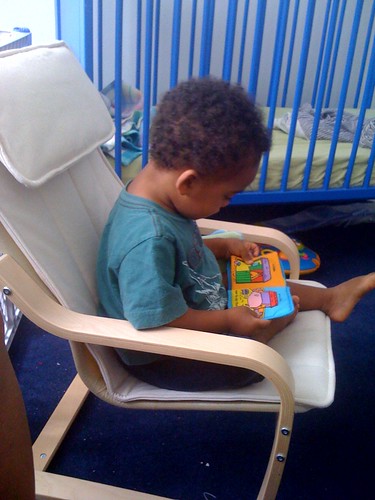
photo courtesy of http://www.flickr.com/photos/emeryjl/ / CC BY 2.0




 Posts
Posts


